WMS Heron
WMS Heron
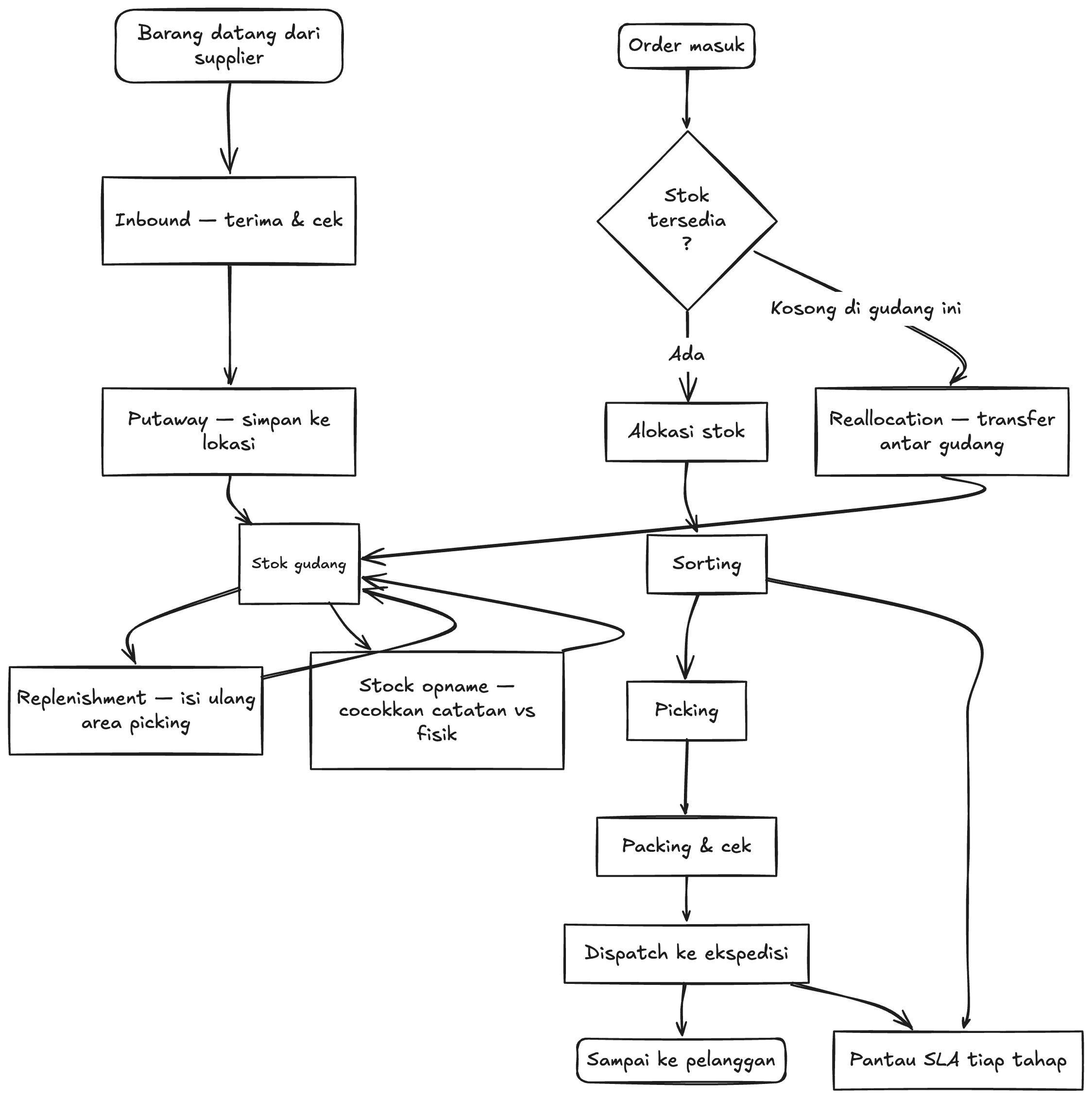
Heron is the system the warehouses actually run on. Stock arrives and is put away, orders are sorted, picked, packed and dispatched, shelves are replenished, stock moves between warehouses when demand shifts, and stock opname keeps the numbers honest. My work sits on the backend — leading the end-to-end build and keeping the pipeline fast enough that a busy afternoon does not turn into a late delivery.
What it does
- Order fulfillment end to end: sorting, picking, packing and dispatching.
- Replenishment and reallocation, including stock transfers between warehouses across Indonesia.
- Inbound receiving and stock opname, so recorded stock matches what is on the shelf.
- Around 100,000 orders on an ordinary day, and close to a million during double-date and payday sales.
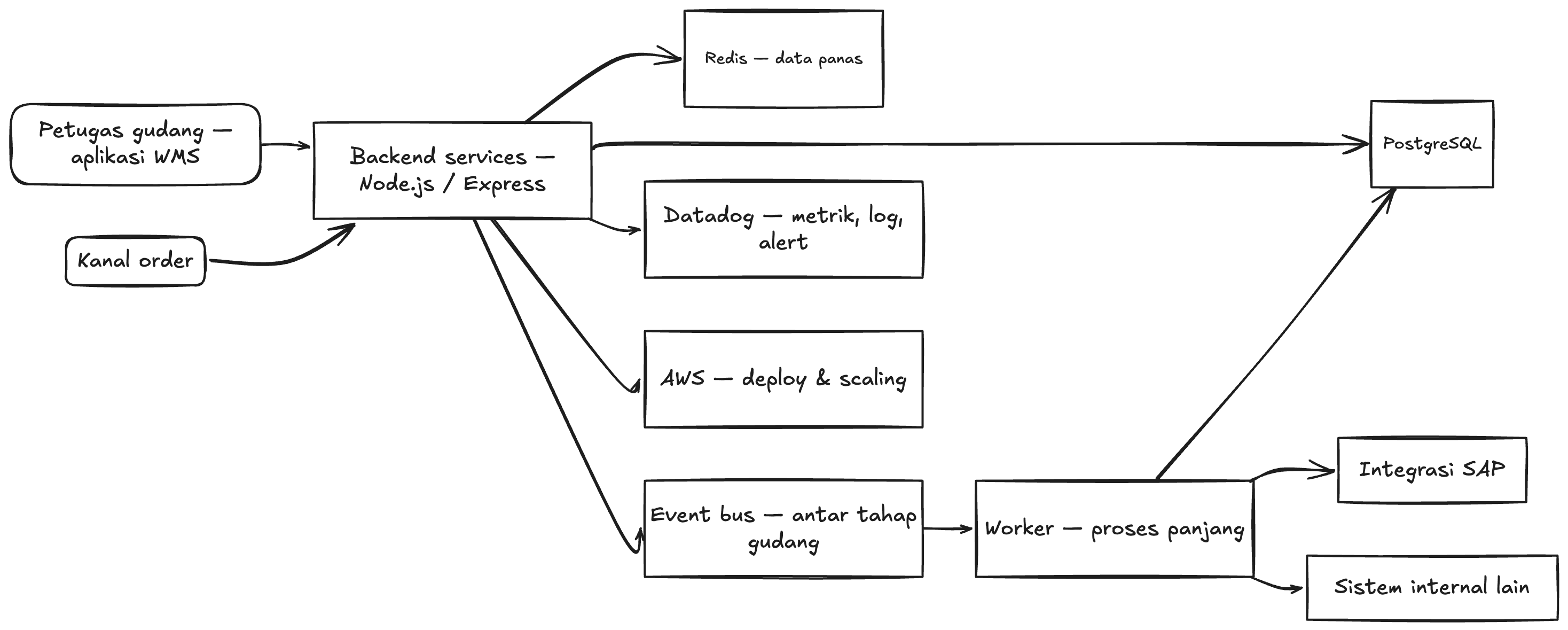
- Integrated with SAP and other internal ParagonCorp systems so warehouse data lines up with the rest of the company.
- Serves 30+ warehouses and 10,000+ active users, with SLA compliance and uptime tuned at the API, query and event level.
How it fits together
- Step 1Inbound
- Step 2Replenish
- Step 3Fulfillment
- Step 4Dispatch
- Step 5Reconcile
Diagrams
How the product behaves, and how the pieces behind it talk to each other.
Stack
- Node.jsExpress.jsEvent-driven
- PostgreSQLRedis
- AWS
- Datadog
- SAPInternal ParagonCorp systems
Worth noting
- Peak days are the real design target: a system sized for 100k orders has to survive a payday sale close to a million.
- Event-driven flows keep warehouse steps decoupled, so one slow stage does not stall the rest.
- Integrations are treated as unreliable by default — SAP and internal systems are talked to asynchronously, never in the request path.